
If the overarching political story of our era is the Trump-led turn against the international order in all its forms - from purely cultural expressions, to trade and foreign policy - then the recent controversy over Greenland is one of the most important things to happen in a while. This episode has shown the hard philosophical limits of the revolt against liberalism, and the internal tensions that will undo that revolt in time. Trump did the one thing that mainstream parties and their ideological counterparts in the media, academia and activism have been trying to do but couldn’t - position themselves as the defenders of a traditional idea of national sovereignty and national dignity. This had the accidental (and for those parties, welcome) side effect of positioning the local European representatives of populism as allies of a hateful and contemptuous globalising force.
The impact came quickly; in Denmark, the polling indicated an immediate benefit to parties of the centre and left. Nigel Farage took the unusual step of mildly critiquing the decision, as did Meloni in Italy, though she’s a slightly less outsider-ish figure than she used to be. So too did Alice Weidel the AFD, who have already learned the hard way the electoral consequences of being too close to Trumpist personalities. The leader of the National Rally in France spoke in terms of resisting American vassalage. (There’s a good summary of the general reaction here.) All of these actors recognised that the problem was not merely a bad application of the Art of The Deal, but something deeper and more serious; and that for them, uncomplicated association with the US on this point was an extinction-level event that required the kind of distancing that had not been needed in the past. What specifically they are distancing themselves from is interesting.
Populism, and the revolt against liberalism and progressivism generally, is a mood, not a political philosophy. That can present a problem for people who want (or need) to direct that energy rather than allow it to vent itself in unpredictable ways. One way of solving this problem has been to retrofit all populist, conservative or at least non-Liberal instincts as being a defense of this nebulous thing called “The West”.
Everyone who seeks to make a profession from channeling the populist instinct, or sees it as a part of their job to do so, talks about “The West” continually. We see it in JD Vance’s address to the Munich security in February 2025 where he argued a retreat from western values like freedom of speech was a greater threat to Europe than Russia; we see it in the recently published American National Security Strategy which states part of it’s aim as supporting “our allies in preserving the freedom and security of Europe, while restoring Europe’s civilizational self-confidence and Western identity.”
We see it constantly in mass media from books (Charlie Kirk’s “How to Beat Woke and Save the West”, Liz Truss “Ten Years to Save the West”, Douglas Murray’s “The War on The West”) to Youtube videos (some examples below). At the bottom of the barrell you have various statue-faced posters on Facebook and Twitter with names like Revenge of the West or Save the West who exist to monetise pornographically demoralising short-form video content on the collapse of European identity.

“The West” isn’t defined - you know it when you see it and it’s easy to name the key elements these talking heads are ostensibly concerned about - individualism, meritocracy, Christianity/ Christian values, but also enlightenment values like freedom of speech and belief in democracy. The underlying utility of “The West” is that the US and Europe have shared civilizational interests and shared threats to those interests. The West of course itself does exist, in the sense that there are countries in Europe whose cultures are based on overlapping conceptions of Christianity, similar ethnic groups and historic experiences. We should be happy the Greenland affair has finally and conclusively revealed that if The West as a concept is true, it’s only this very general level. On the level of policy, day to day politics, and day to day life as experienced in individual countries, the version of The West that is currently abroad is absolutely not true, and one of the benefits of the Greenland situation is we can finally stop pretending that is and move on.
You get a very clear view of this from Ireland because The West sits uncomfortably with our own local culture and the reality of our history. Attempts to apply the concept to Ireland reveal that in most cases that it’s just America or American culture (or a variant of a right-wing Anglo-American one - but that’s a whole other story) in disguise.
Free speech is a great example. I don’t accept that America has a history of unfettered free-speech; the application of that article of the constitution has historically been very different from the free-speech maximalist position that is accepted as correct today. Nevertheless there is an agreed, expansive post-sixties conception of free-speech in America, and that has been totalised globally as the natural historic position of The West.
If “unfettered free speech is the western norm” was ever true anywhere it’s definitely not true of Ireland. Through a mixture of structural and historic forces Ireland has been both pushed and pulled towards consensus-driven and institutionally-enabled speech restriction. The desire on the part of modern Irish officials to clamp down on speech is often presented in right-wing and American media as pathological and non-western. But Ireland is part of the west and the kind of speech restrictions that are proposed today are historically pretty normal, and not terribly unpopular as far as I can tell - if they were, our election results would be very different. This below video of a Green Party Senator praising proposed speech laws because Irish people support “restricting freedom for the common good” went viral a few years ago via Fox News. The content of her speech made me angry, because I hated the proposed laws she was speaking about and think they’re bad, but her analysis itself didn’t make me angry because there’s a sense in which it’s correct.
It’s important to point out that Ireland’s free speech laws are not particularly bad in the European context, nor is the attitude amongst the public unusually supine. When I look at arrest figures, I wouldn’t swap our speech environment for that of the larger countries around us, whose populaces are similarly complacent about speech restriction for their own local reasons. The point here is only that the modern understanding of the American 1st Amendment is positioned as the natural and universal attitude of “The West”, and it isn’t.
There are other examples. American right-wing commentators (both professional ones and hobbyists) focus on immigration as a civilisational threat but they tend to fixate on specific types. Having gorged on stories about rape gangs in northern british towns from the anglophone press outside america, and having passed those stories though the lens of own political incenitives and fears, the American social media machine will often promote stories about immigration in Ireland that position us as subject to a creeping islamicisation that isn’t really happening or at least is not happening in Ireland the same way as it is elsewhere. There is plenty to argue about when it comes to Ireland and cultural change, but this approach means tons of energy that could be used for something productive is dumped down this useless attentional pipeline. I have even seen the widespread Irish public support for Palestine presented in this context, which is a catastrophic misreading of the situation. Again: all of this is downstream of the idea there is an official set of threats facing “The West”, and local circumstances will have to be bent to fit that frame where they don’t do so naturally.
This isn’t simply a comment of irritation about Americans misunderstanding Ireland or projecting their local priorities on to us as a universal Western standard. There is an incentive structure that allows people to create a career and dominate the conversation by borrowing an American megaphone. They do this ostensibly on behalf of an Ireland that may not agree at all, and in doing so they either divert otherwise useful energy or poison the well on certain delicate topics. The kind of person you select to dissent within your own system will be adapted to your local circumstances, but might seem like an awful and unintelligible choice to outsiders and the reverse is also true. It’s common to find that the algorithm has selected Irish defenders of “The West” who are are explicitly hateful about Ireland and Irish people, and on the wrong side of issues that are basic litmus tests of participation and success in the Irish system, like the aforementioned Palestine/ Israel.
An additional complication of this problem (“The West” as the driver of populist dissent being American political and cultural priorities in disguise) is that it forces local dissenters into perceived alignment with viscerally repulsive MAGA gargoyles from Elon Musk to Brylin Holland who also speak on behalf of this concept of The West. Any one of these people could have been bred in a lab to be alienating and disturbing to a European voter. Certainly there is no set of values, western or otherwise, that these people could espouse which could help someone working to win power in Ireland.
Ireland is an unusually clear example because of certain deep historical experiences (which are still live issues) that are relatively unusual in a western European context. But we’re not an outlier in the sense of how poorly an American-centric concept of The West maps onto our history, culture and politics. All the things I said about Ireland above apply elsewhere in Europe, especially among smaller European countries. Even for larger and more historically powerful ones, the local representatives of populism can fall into the habit of talking to potential voters in a very alien manner influenced by America. I’m a stranger to the UK but have understood it to be functionally atheist my whole life. Whatever I feel about the man himself, Alistair Campbell’s famous comment that “we don’t do god” seems obviously correct about the whole UK political system (at least when it comes to Christianity) and not just the Blair government he was speaking about at the time. So when I see anti-immigration protestors in London walking around with crucifixes and signs that say “Jesus is King”, I wonder what mixture of incentives could be at play and what audience is being pandered to, because I don’t think it’s the normal electorate.
So one part of the picture is that The West is just a way of forcing us to view things through an American frame that doesn’t fit. The other part is that the forces from which The West is said to be under attack are themselves amongst the most characteristically western ideas going; not only that, but America has been the key disseminator of those ideas, both for their own sake and as an instrument to extend American influence to the rest of the world.
These tensions became visible as the Greenland situation progressed. American commentators who normally style themselves as “anti-woke” began to justify their actions by sliding with suspicious ease into the language of anti-colonialism, while still talking in terms of a contemptuous imperial conquest. Their concern was not just pre-emptively outflanking China and Russia, or grabbing hold of rare earth minerals, but also liberating that naive population of that land and how the yoke of Danish oppression.

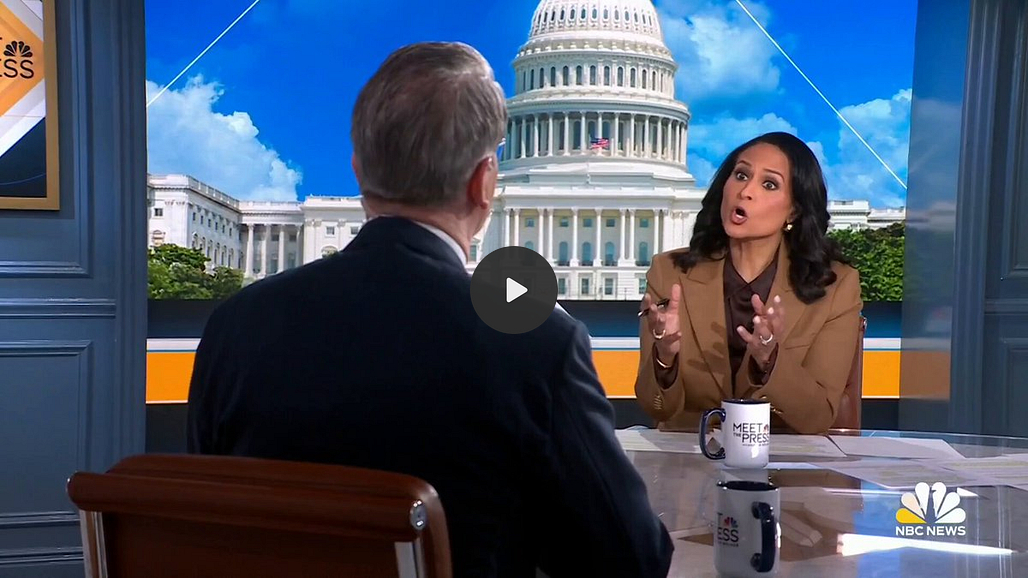
Naturally some of this is a Trump-inspired approach of making every contradictory argument simultaneously, in the hopes that one will stick and that you will be able to say that’s obviously what you meant all along. But it’s not just that, and this ideological code-switching explains why a broad appeal to “The West” is such an unreliable lodestar. There is no more recognisably or definitively Western/ American figure than the AWFL, and we know that’s true by how quickly ostensibly right-wing representatives of the system will lapse into that outlook and those patterns of speech when they think it’s profitable to do so.
The second problem is that it is the attitudes that are identified as Woke and therefore anti-The West have as often as not been an instrument of American cultural power, and have gained traction precisely as a result of that; for better or worse, a rainbow flag is as characteristic an indicator of an Ameircan influence as a military base or a McDonalds. When we speak about local traditions being degraded or devalued, they are often devalued in favour of cultural practices that are themselves American or American-inspired. In the past the money that funded the push for these changes was as often as not American government money. That’s one of the things that made the sudden Trumpist turn towards speaking in terms of this modern right-wing conception of The West so galling. The most powerful force acting against this conception of The West has been the American government, American money, the output of American campuses. Europeans - who of course bear plenty of blame for the state of the world and most of the blame for the state of their own countries - were being scolded by an imperial overlord for following the instructions that the overlord had issued, to the letter.
Where does all of this leave these populist movements, and the people drawn to them? Will they walk away from this idea of a unifying Western ideal, since it’s obvious it’s often just American power with a fake moustache on? A best case outcome for the American branches of the populist movements and the individual European ones would be to shut up about each other for a while, for everyone to defer to the local voices in each country and stay out of each other’s business. For a variety of reasons, that’s not likely.
Part of the problem is the reality of power; part of it is also that populist movements are full of people who don’t actually want change, or at least who consider real change to be a low personal priority. What’s really important for a lot of people is experiencing the thrill of never-ending, mean-spirited public ideological brawl, and/or making money from that chaos. With that in mind America is the gallery you play to; that’s where all the money, attention and cultural heat is located. So people caught in this incentive structure are going to keep talking in terms of The West and it’s salvation - that means performing a local dilemmas into an american cultural langauge, in order to provide for an American audience the entertainment of a colourful dramatisaion of their own struggle - and fuck the underlying reality, and whatever bad things this process does to it.
One of the intrigues of the post-Greenland moment is we are going to see whose political interests are about pandering to an American audience, and whose are about something that is deeper but inevitably smaller, more local, and perhaps less thrilling. Is the future of dissident politics going to be a lot of people agreeing with Mark Carney’s speech about mid-size powers decoupling from the larger system? No offence to anyone animated by that (it seems like it’s worth being animated by) but there is nothing thrilling about that prospect, certainly in comparison to posting about The War on The West; there is nothing red-blooded or transgressive there. It might not even really feel like a fight! It certainly wouldn’t be profitable in the same way.
I’m at pains to point out that I like America and its culture, and that it’s unrealistic to expect a great power not to assert its interests. It’s also true that the tension within conflicting western ideals is happening in America itself. I’m still at the point where if there has to be a global hegemon I would rather it be them than (say) China, since Ireland at least has historic ties to the United States that it can work. I don’t propose rejecting America either as a cultural model in some spheres or as a partner (and of course it’s absurd to suggest a country like Ireland is big or powerful enough to do that anyway even if we wanted to). My purpose is only to recognise that an America-centric idea of The West is something that does not have the universal applicability it advertises once you get down into the detail; that the idea may in fact be a hindrance when pushing back against the worst parts of Progressive Liberalism, and that the use of the term has become a telltale sign of someone who is hiding their real motives.
Going back to something I said earlier, I think that the issue of free speech is a useful reference point here. The fact that I say that Ireland has a different free speech culture than post-60s america doesn’t mean that I prefer ours to theirs (I don’t), it doesn’t mean that as a writer I wouldn’t trade every law on our books for a first amendment (I would), and doesn’t mean that I won’t support a Irish political parties or movements that push back against the worst overreach on this topic (I will). It only means that I recognise saying “unrestricted free speech is in our western DNA” is not going to work because it’s not true, and I don’t think it’s even that popular. Winning - on this issue and others, in Ireland and elsewhere - is going to take something different. To put it another way: you have to start from where you are. I think all of the Greenland stuff is a welcome reality check and reminder that “The Discourse” is not politics, and activity in The Discourse is not the same as political power or political change.
Really well done, Conor. As an American, it gave me a lot to think about.
Became a paid subscriber today so I could post this comment.
1) I think for Ireland, China as global hegemon would (will?) be particularly terrible culturally since the sucking up that small countries do by necessity would in the case of China reinforce the preëxisting self-harm tendency of third-worldism.
2) While it’s not great for the European right obviously, and particularly bad for those parties that are determined to attach themselves to the US (FdI in Italy and AfD in Germany come to mind), I have to say I kinda like the Greenland thing: While I very much like Americans, I don’t much like the American empire and the brouhaha forces some emotional distance to it.
3) I also wish the Americans would have managed to coerce purchase. In this state of Europe it’s a strategic and economic liability, and the only thing to recommend holding on to it is pride (unless you count what other islands the US bought from Denmark are known for these days). Pride, however, is for the rich and strong and Europe, let alone Denmark, is currently neither. Getting the wounded self-respect from our incipient “century of humiliation” going as an impetus for change over such an inconsequential matter would have been nice, because the humiliation is coming either way.